
New York City Travel Guide 2026: What First-Timers Actually Need to Know

Let me be straight with you: most New York City travel guides read like a Wikipedia article with a stock photo slapped on top.
This one is different. I’ve visited New York City six times. First as a wide-eyed solo traveler in 2015, most recently in late 2025 with my partner to see what’s changed.
I’ve gotten lost in the subway, eaten the best $3 slice of my life at midnight in Hell’s Kitchen, and spent way too much money on a Midtown hotel that first trip when I didn’t know any better.
This New York City travel guide for 2026 is everything I wish someone had told me before that first visit. What’s worth your time, what’s overrated, how not to blow your budget, and how to feel like you actually belong there rather than just surviving it.
Is New York City Worth Visiting in 2026?
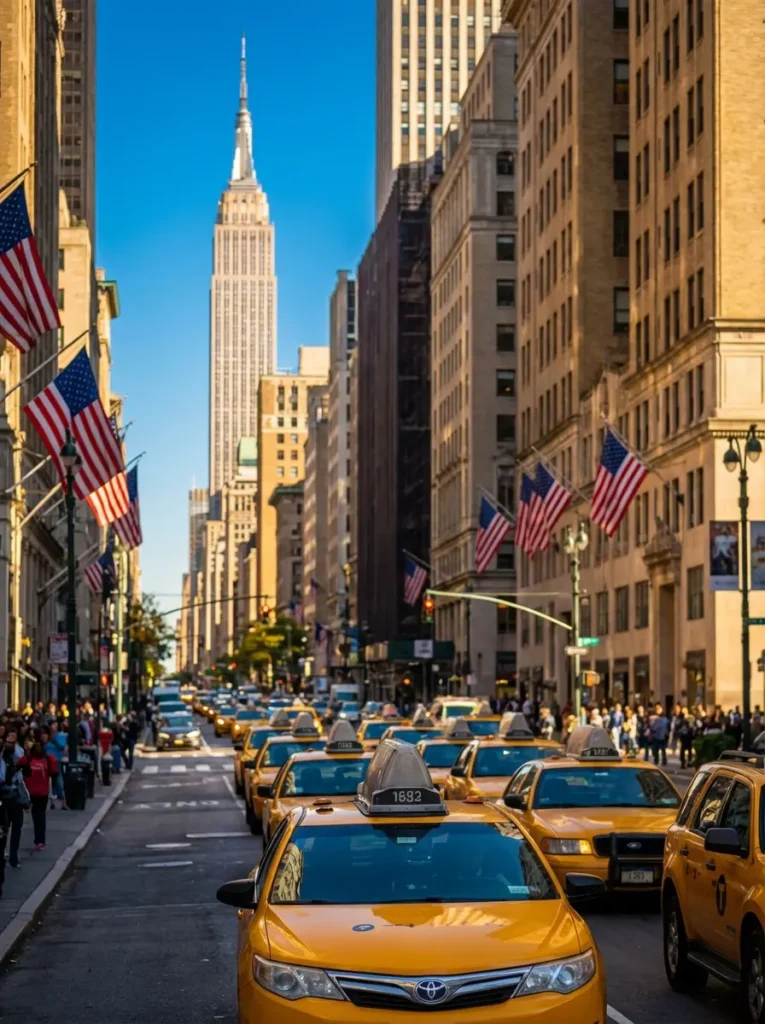
at the end of the road — some views in this city just
never get old
Short answer: absolutely! And this might be one of the best years to go.
The city has fully rebounded. New neighborhoods have exploded (Williamsburg’s north end is genuinely incredible right now), iconic restaurants have come back stronger, and there are new cultural spaces that simply didn’t exist a few years ago.
The energy that makes New York New York is very much back.
I’ll walk you through everything below.
Before You Go: Practical Planning Tips
Best Time to Visit New York
My honest pick? September through November. The summer humidity in Manhattan is brutal — subway platforms in August feel like standing inside a clothes dryer.
Fall brings crisp air, Central Park glowing with foliage, and hotel prices that drop slightly once summer crowds thin out.
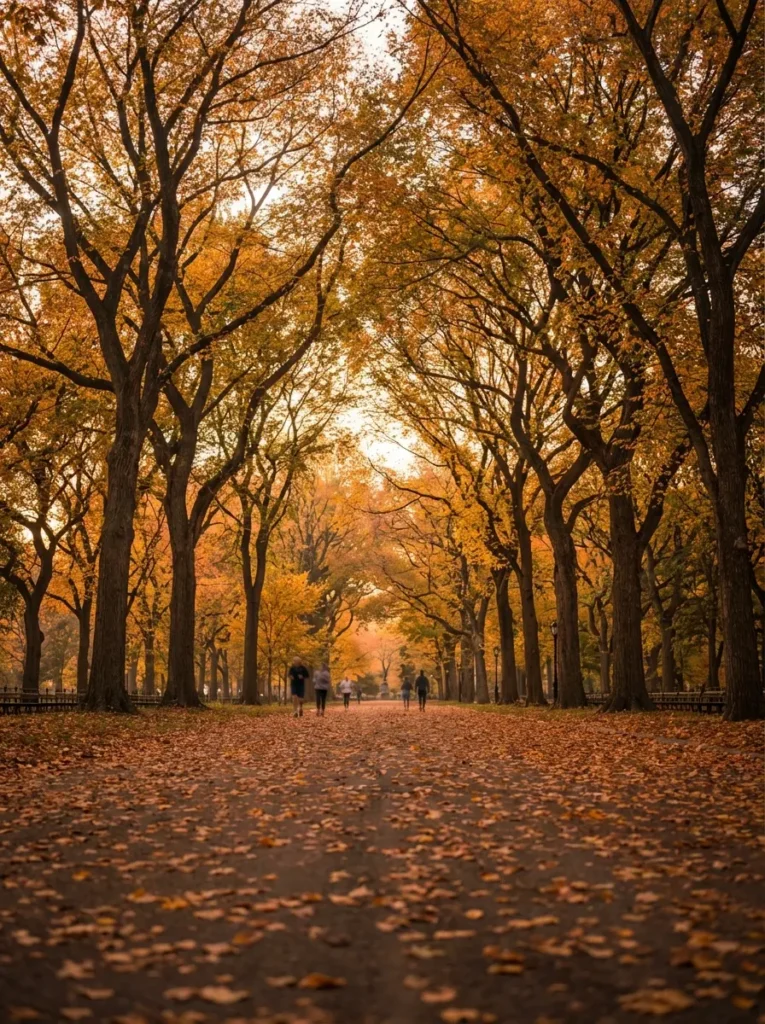
Spring (April–June) is a close second. The cherry blossoms in the Brooklyn Botanic Garden are stunning, and the city has an optimistic energy after winter.
Winter has its magic — holiday markets, ice skating at Bryant Park, and the city lights at their most beautiful. Just pack serious layers and mentally prepare for cold.
Summer is great for festivals, rooftop bars, and outdoor concerts. Hydrate constantly and go into it with realistic expectations about the heat.
Visa Requirements
If you’re traveling from a Visa Waiver Program country, you can visit for up to 90 days without a visa — though you’ll still need to complete an ESTA before departure. Check the U.S. Department of State’s official site for current requirements. It’s the most reliable source and updates frequently.
What to Pack for New York City

Here’s the real talk on packing. NYC is a walking city. On my last trip I averaged 18,000+ steps a day, and my feet paid dearly because I cheaped out on footwear.
What I never travel to New York without:
- Comfortable walking shoes — This is the single most important thing you’ll pack. I travel with a pair of supportive, cushioned sneakers that look good enough for dinner but carry me through 10+ miles without complaint. Your feet will either thank you or curse you depending on this choice.
- A slim, powerful portable charger — You’ll be using Maps, taking photos, and checking restaurant reviews non-stop. This compact power bank fits in a jacket pocket and has saved me more times than I can count.
- An anti-theft crossbody bag — Crowded subway cars and Times Square are prime pickpocket territory. I switched to this slash-resistant crossbody a few trips ago and it gives me genuine peace of mind in dense crowds.
- Layers — New York weather swings wildly, especially in spring and fall. A lightweight packable jacket is non-negotiable.
- Contactless payment or MetroCard — The subway’s OMNY system now lets you tap in with any contactless card or your phone.
Getting Around New York City
The subway intimidated me on my first trip. Now it’s one of my favorite parts of visiting. Once it clicks, you realize you can get almost anywhere in the city for a few dollars.
The MTA Subway
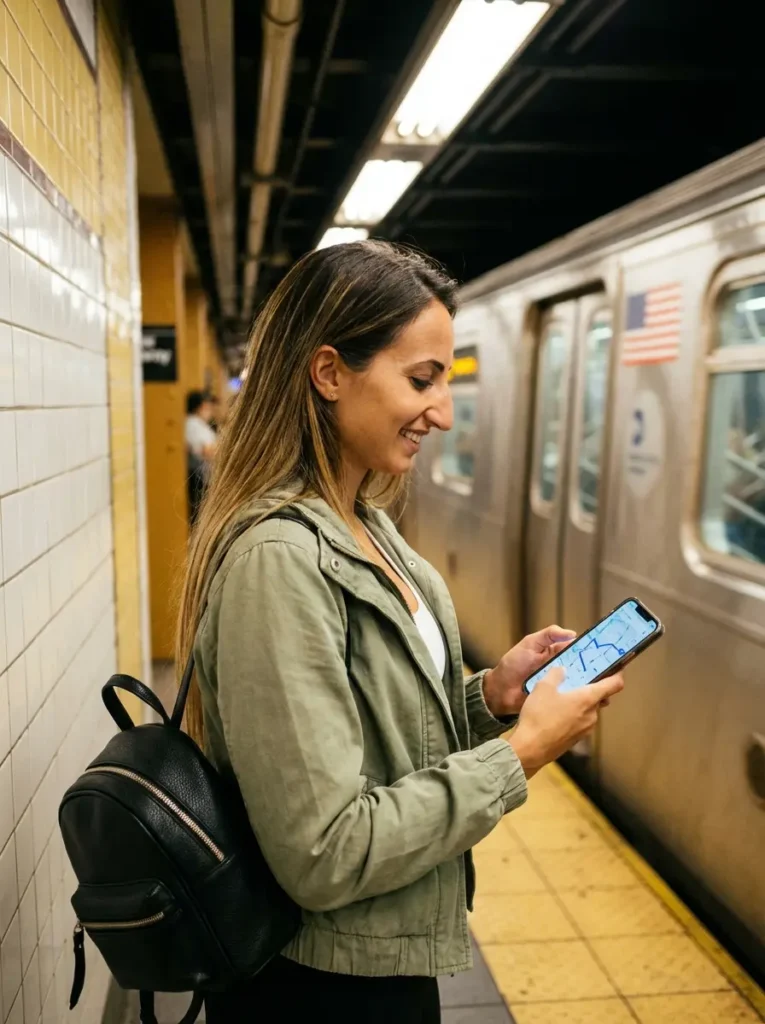
Fast, runs 24/7, covers Manhattan, Brooklyn, Queens, and the Bronx. Yes, it’s old and occasionally chaotic. But once you stop fighting it, it’s one of the greatest urban transit systems in the world.
My tips: download the MTA app or use Google Maps for directions — both will tell you exactly which train, which platform, and which exit to use.
Tap to pay with a contactless card or phone via the OMNY system (no MetroCard required). And stand clear of the closing doors — other passengers will not wait.
Taxis, Ride-Shares, and Walking
Yellow cabs are everywhere. Uber and Lyft are easy but surge during busy times — avoid them right after Broadway shows let out.
My honest preference for anything under a mile or two? Walk. The distance from Times Square to Central Park sounds far and takes fifteen minutes on foot. You’ll see things you’d completely miss underground.
New York City Attractions Worth Your Time
Statue of Liberty and Ellis Island
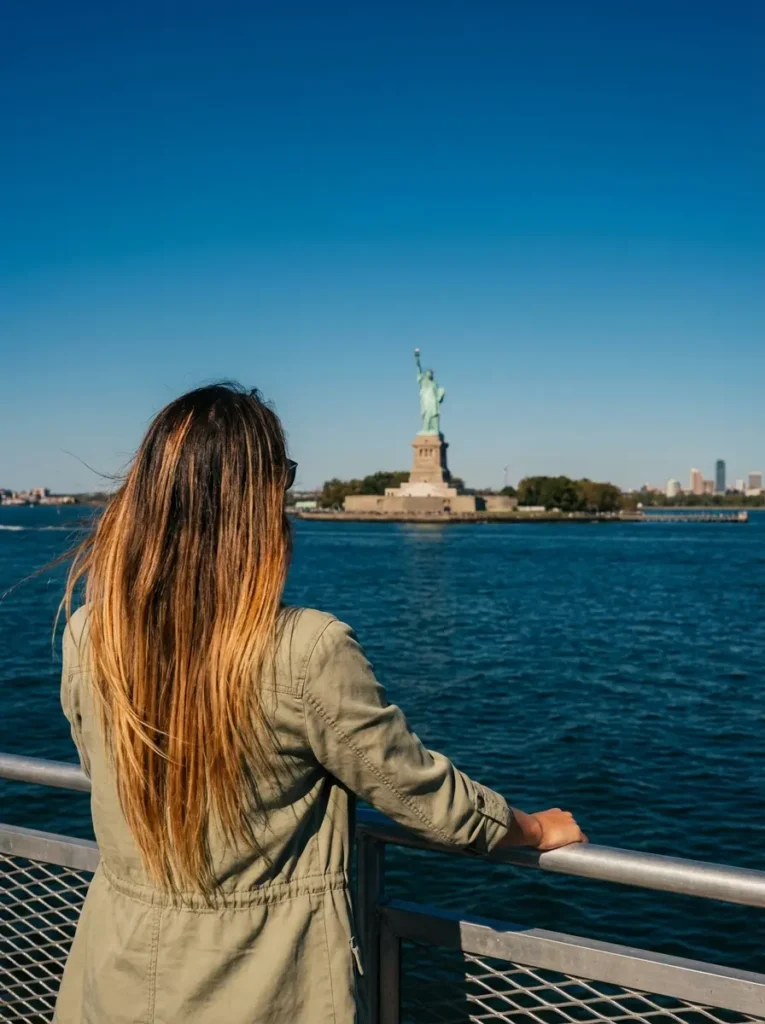
This one takes a full day and requires planning ahead. Book tickets in advance through the official National Park Service site. Standing at the crown of Lady Liberty looking back at the Manhattan skyline is one of those moments that genuinely lives up to the hype.
Ellis Island is often the more moving stop of the two. If your family came through America as immigrants, bring tissues.
Central Park
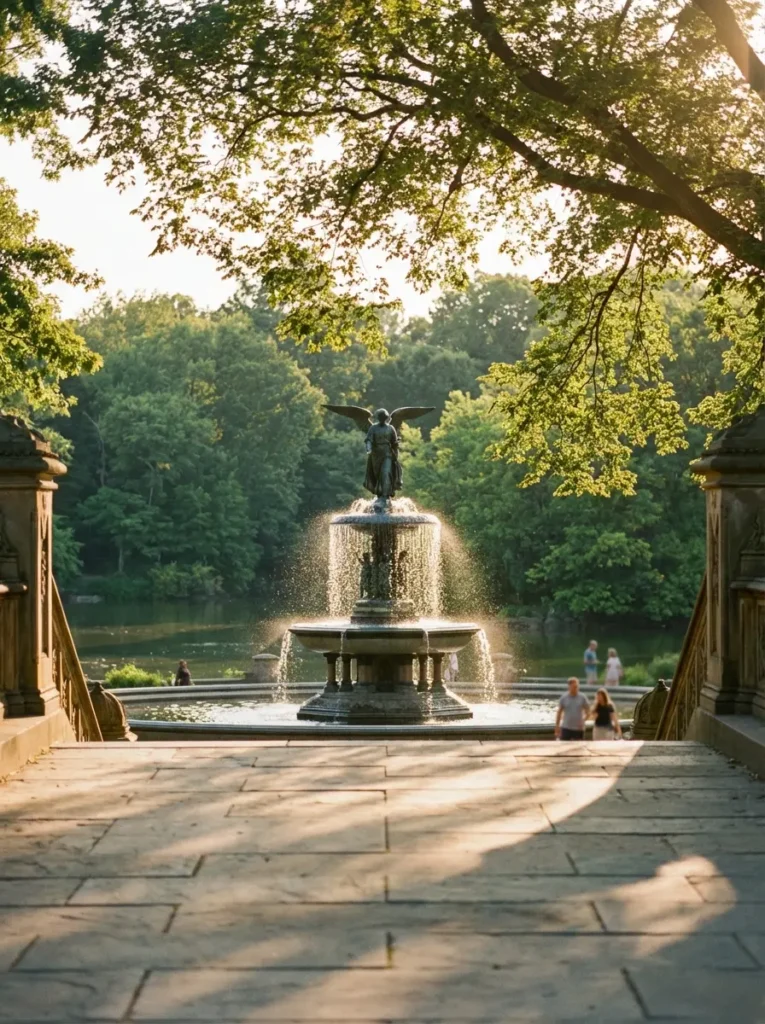
that stops you completely still. Free, open all day,
and somehow even more beautiful in person.
People consistently underestimate Central Park. It’s 843 acres — you could spend three hours there and barely scratch the surface.
On my last visit I rented a rowboat at the Loeb Boathouse, had a coffee near Bethesda Terrace, and sat at Strawberry Fields for a while. It feels like a completely different world from the city humming around it.
Go early in the morning if you can. The light is beautiful, it’s quieter, and you’ll share it mostly with locals doing their morning runs.
The High Line
An abandoned elevated railway transformed into a 1.45-mile park running through Chelsea. One of those places that genuinely delivers on the concept.
The views of the Hudson, the art installations, the landscaping — it’s thoughtful urban design at its best. And it’s completely free.
The Brooklyn Bridge Walk
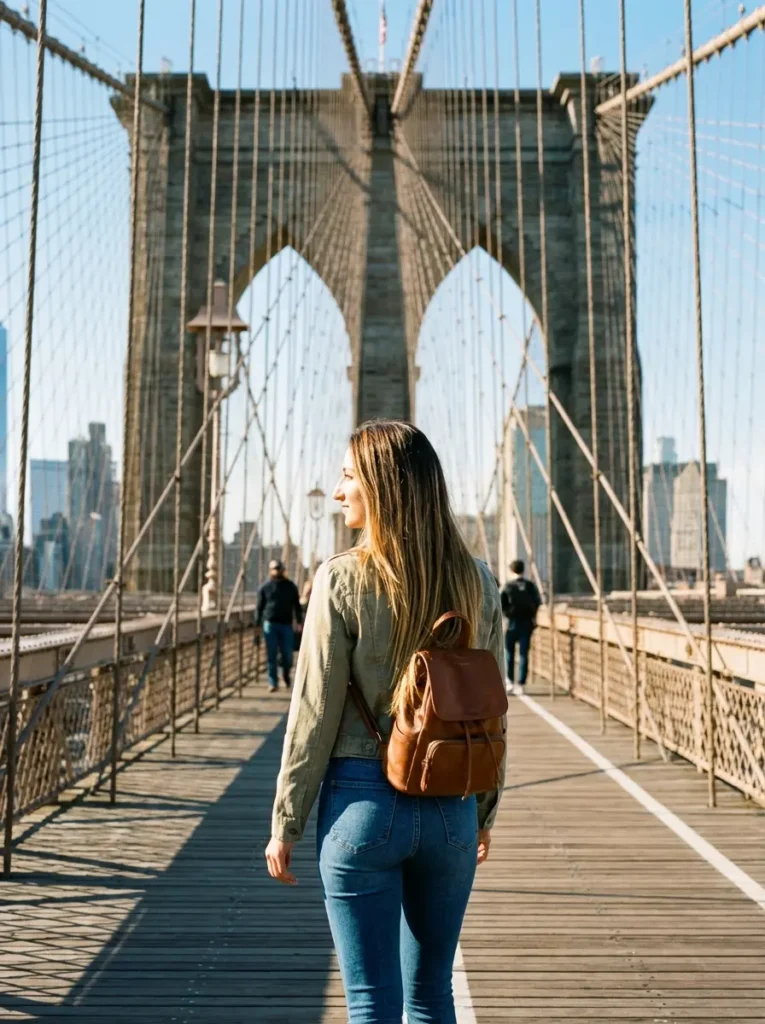
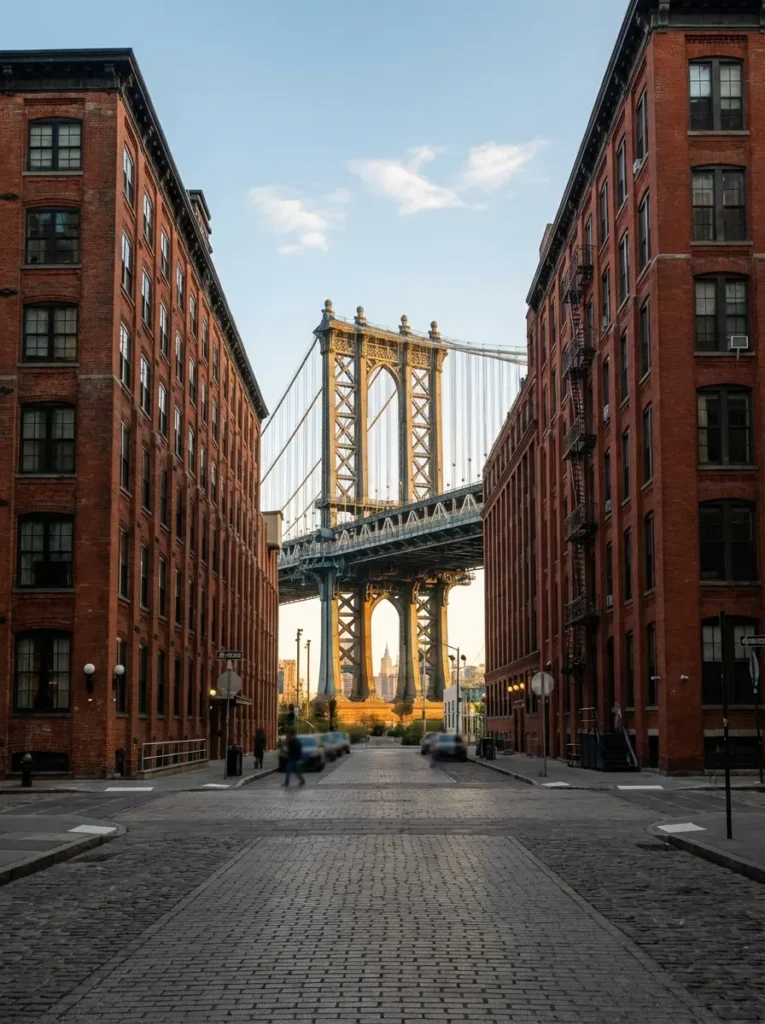
Walk it from the Brooklyn side toward Manhattan for the best views and photos. Takes about 35 minutes at a relaxed pace. Stop at the DUMBO waterfront afterward — the view of the bridge from Washington Street is one of the most photographed spots in the city for good reason.
The Museums
The Metropolitan Museum of Art is one of the greatest museums on earth. Full stop. Buy timed tickets in advance, arrive when it opens, and focus on two or three wings rather than exhausting yourself trying to see everything.
MoMA is exceptional if contemporary art is your thing. The permanent collection alone — Picasso, Warhol, Frida Kahlo — justifies the admission.
The American Museum of Natural History is wonderful, especially traveling with kids or if you have any interest in anthropology, space, or natural history.
For free options: the Brooklyn Museum offers free first Saturdays, and the Chelsea gallery district is always free to browse.
Where to Eat in New York City
This city will ruin you for food everywhere else. I say this as someone who lives somewhere with a genuinely solid dining scene.
Classic NYC Eats You Need to Try
Pizza by the slice — skip the famous tourist spots and find a corner slice shop in whatever neighborhood you’re in. The unassuming places with a guy folding slices behind the glass are usually the best. Budget $3–4 a slice.
Bagels — New York bagels are different in a way that’s hard to explain until you’ve had one. Order it toasted with lox, cream cheese, capers, and red onion. Russ & Daughters on the Lower East Side is a genuine pilgrimage worth making.

breakfast — it’s a whole experience
Chopped cheese — A New York deli sandwich that rivals the cheesesteak for most underrated sandwich in America. Get it from a bodega in Harlem.
Neighborhoods Worth Eating Your Way Through
Chinatown for dumplings, roast duck, and dim sum at prices that feel impossible in 2026. Joe’s Shanghai for soup dumplings, or just wander Mott Street until something catches your eye.
Jackson Heights, Queens for the most diverse food corridor in the world — Indian, Nepali, Tibetan, Colombian, Mexican — all within blocks of each other. This is where I eat when I want to feel like a local.
Harlem for soul food. The neighborhood has excellent spots well beyond the tourist radar.
The West Village for a nicer dinner. It’s pricey but the atmosphere — cobblestone streets, brownstones, lantern light — is unmatched.
For a comprehensive breakdown of where to eat in each borough, the NYC official tourism site keeps a well-curated, regularly updated restaurant guide worth bookmarking.
New York City Neighborhoods: A Quick Primer
Manhattan is where most first-timers anchor — Times Square, Central Park, the museums, Wall Street. But don’t mistake it for the whole city.
Brooklyn is where I’d spend more time on a return trip. Williamsburg for food and nightlife, DUMBO for views and boutique shopping, Park Slope for beautiful brownstones and a genuine neighborhood feel.
Queens is underrated by tourists and essential for food, cultural diversity, and a more authentic NYC experience.
The Bronx has the Bronx Zoo (genuinely excellent, especially with kids), the New York Botanical Garden, and Yankee Stadium.
Staten Island — take the free ferry just for the views of the Statue of Liberty and Manhattan skyline. It’s one of the best free things you can do in New York.
Where to Stay in New York City: The Best Neighborhoods for Every Budget
One of the most common mistakes first-timers make is defaulting to a Midtown hotel because it feels “central.” It is central — but it’s also the most expensive and least atmospheric part of the city. Here’s how I’d actually think about it.
Before you dive in, use the map below to search real-time availability and compare prices across all these areas.
Rates in New York shift constantly, so it’s worth checking a few different dates if you have flexibility — sometimes shifting by just two or three days makes a noticeable difference to your total.
Midtown Manhattan — Best for First-Timers Who Want Convenience
If this is your first trip and you want to walk out the door and be in the middle of everything, Midtown delivers. Times Square, Central Park, and the major museums are all within easy reach.
The trade-off is price — you’ll pay a premium for the location — and the area itself has very little neighborhood character. It’s more city infrastructure than community.
Good for: First visits, short stays of 2–3 days, travelers who prioritize logistics over atmosphere.

Hotels I’d actually book here:
The Kixby — The rooftop bar alone made me book it a second time, and waking up one block from the Empire State Building never gets old.
Hilton Garden Inn West 35th — When I just need a clean, spacious room in a great location without any surprises, this is the one I keep coming back to.
LUMA Hotel Times Square — I was skeptical about staying this close to Times Square until I slept here and realized how shockingly quiet the rooms actually are.
Lower Manhattan / Financial District — Best for Value and Views
This surprised me on my third trip. Hotels here are genuinely cheaper than Midtown, you’re steps from the 9/11 Memorial, the Brooklyn Bridge, and the Staten Island Ferry, and it’s quiet at night in a way that Midtown never is. Easy subway access gets you uptown quickly.
Good for: Budget-conscious travelers, history lovers, anyone doing a lot of Brooklyn sightseeing.
Artezen Hotel — The complimentary morning coffee and the two-minute walk to the Statue of Liberty ferry made it feel like I’d planned everything perfectly, even though I’d just gotten lucky with the booking.
Hyatt Centric Wall Street — After a long day of sightseeing I came back to a proper comfortable room at a price I’d normally only expect in Queens — that’s the FiDi advantage nobody talks about.
Hilton Garden Inn Financial Center — Every single staff member I interacted with during my stay remembered my name by day two, which sounds small but genuinely changes the whole feeling of a trip.
Upper West Side — Best for a Real New York Feel
If I’m taking someone to New York for the first time and they want to feel like a local, I put them here. Beautiful brownstones, Central Park on your doorstep, great restaurants and coffee shops, and a quieter energy than Midtown. Subway access is excellent.
Good for: Couples, families, travelers who want to experience a residential Manhattan neighborhood.
Hotel Beacon — The kitchenette saved me probably $200 on breakfasts and snacks over a week, and being steps from Central Park made every morning feel ridiculously good.
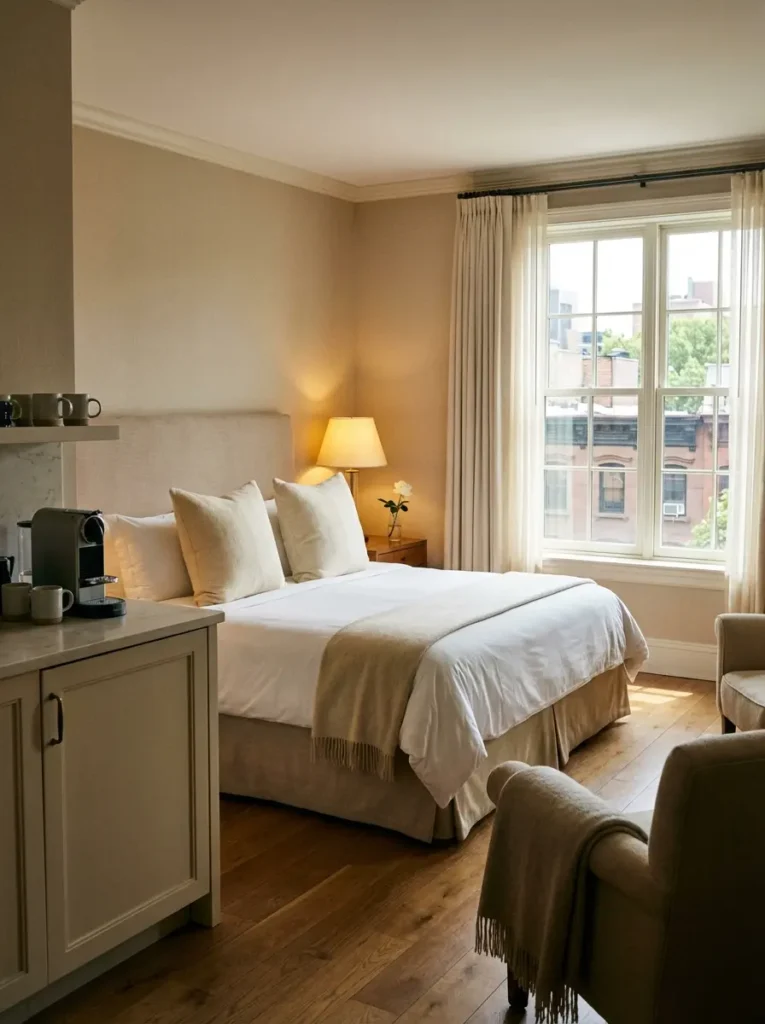
best-value hotels in all of Manhattan — steps from
Central Park with a kitchenette in every room
The Lucerne — I walked into the lobby and immediately felt like I was staying somewhere with actual soul, not just another cookie-cutter Manhattan hotel.
Hotel Belleclaire — The 1903 mosaic tiling in the lobby stopped me in my tracks on check-in — it’s the kind of detail that makes you feel like you’re staying in the real New York.
Williamsburg, Brooklyn — Best for a Hipper, More Local Experience
Williamsburg has transformed into one of the most exciting places to stay in the whole New York City area. Excellent food scene, rooftop bars, independent shops, and a direct subway line (the L train) that gets you into Manhattan in about 10 minutes.
Hotels here are often significantly cheaper than comparable Manhattan options.
Good for: Return visitors, solo travelers, anyone interested in food and nightlife over major landmarks.

skyline in front of you is the kind of thing you
see once and immediately start planning your return trip
The William Vale — The rooftop view of the Manhattan skyline at sunset from here is genuinely one of the best things I’ve experienced in New York, and I wasn’t even staying the night I first saw it.
Astoria, Queens — Best for Travelers on a Tight Budget
This is my secret pick for anyone watching their spending. Astoria is a beautiful, diverse neighborhood with incredible food (Greek and Middle Eastern especially), a genuine community feel, and hotels that cost a fraction of Manhattan prices.
The N and W subway lines connect you to Midtown in about 20–25 minutes.
Good for: Budget travelers, food lovers, longer stays where value really adds up over time.
Wyndham Garden Long Island City — I talked myself into staying here purely on budget grounds and walked away thinking I’d made the smartest decision of the whole trip.
Quick tip on booking: New York hotel prices fluctuate dramatically. I always check a few weeks out, then again closer to the date — prices sometimes drop as hotels try to fill last-minute inventory. Book refundable rates when you can so you keep the flexibility.
NYC Budget Breakdown: What Does It Actually Cost?

I won’t pretend this is a cheap city. But it’s more manageable than people assume.
Budget traveler: $100–$150/day — hostel or budget hotel in Harlem or Astoria (Queens), street food and slice pizza, subway only, free attractions like the High Line, Central Park, and Brooklyn Bridge.
Mid-range: $150–$300/day — a decent hotel in Midtown or Brooklyn, a mix of sit-down restaurants and casual spots, one or two paid attractions.
Splurge: $300+/day — fine dining, Broadway tickets, observation decks, anything near Fifth Avenue.
Where to stretch your budget:
- Check each museum’s website for free admission days or suggested donation hours
- The NYC CityPASS bundles multiple major attractions at a meaningful discount
- Walk wherever possible instead of ride-sharing
- Try lunch menus at the restaurants you want for dinner — often significantly cheaper for the same kitchen
Staying Safe in New York City
NYC has a reputation that doesn’t match reality for most tourists. It’s a large city and normal big-city awareness applies — keep your phone out of view on the subway, stay in well-lit areas at night, be alert in dense crowds.
The neighborhoods most visitors explore are generally safe. I’ve walked through Midtown, Greenwich Village, and Brooklyn late at night without issue.
One specific tip: keep your bag in front of you on crowded subway cars. That’s where my anti-theft crossbody earns its keep every single trip.
Seasonal Events in New York City 2026
Spring: Cherry blossoms at the Brooklyn Botanic Garden (usually peak late April), the Five Boro Bike Tour in May, Tribeca Film Festival.
Summer: Shakespeare in the Park free performances at Delacorte Theater in Central Park, SummerStage concerts across the boroughs, outdoor film screenings.
Fall: The New York Film Festival, the Greenwich Village Halloween Parade (October 31st), and the NYC Marathon in November — one of the most electric things to witness even as a spectator.
Winter: Holiday markets at Union Square, Bryant Park, and Columbus Circle. Ice skating at Rockefeller Center (touristy, but genuinely fun). New Year’s Eve at Times Square if you’re adventurous enough.
If you’re visiting in December, I put together a full Christmas in New York: Two-Day Itinerary For First Timers that covers exactly how to make the most of it. Just pack serious layers and mentally prepare for cold.
Specific 2026 dates shift — always confirm at nycgo.com closer to your trip.
3-Day New York City Itinerary

some of the best views of the Manhattan skyline and
Statue of Liberty you’ll find anywhere
Day 1 — The Classics
Morning: Ferry to the Statue of Liberty and Ellis Island (book tickets in advance — this cannot be stressed enough). Afternoon: Walk Wall Street, stop at the 9/11 Memorial — quiet and genuinely moving. Late afternoon: Walk across the Brooklyn Bridge and explore DUMBO. Evening: Dinner in Brooklyn, maybe a rooftop bar in Williamsburg.
Day 2 — Culture and Central Park
Morning: Central Park — Bethesda Terrace, the Loeb Boathouse, Strawberry Fields. Afternoon: The Met (the rooftop café, if open, has views that are almost unfair). Evening: Times Square to experience it, then a Broadway show — book well in advance for anything good.
Day 3 — Neighborhoods and Food
Morning: The High Line from the Meatpacking District north through Chelsea. Afternoon: SoHo, then wander through Little Italy and Chinatown. Evening: Dinner in the West Village, one of the most beautiful places to be in Manhattan after dark.
Essential Apps for Visiting New York City
- MTA app — real-time subway and bus arrivals
- Citymapper — excellent for subway-specific navigation with exit guidance
- Resy or OpenTable — restaurant reservations (essential for dinner anywhere good)
- TodayTix — last-minute Broadway and Off-Broadway tickets, often at a significant discount
Frequently Asked Questions About New York City Travel Guide
How many days do I need in New York City?
Four to five days is the sweet spot for first-timers — enough to hit the major landmarks, explore a couple of neighborhoods, eat your way through a borough or two, and still have breathing room. A full week lets you go much deeper.
Is tipping expected in NYC?
Yes, very much so. 18–20% at restaurants is standard. Tip your cab driver, tip hotel housekeeping, tip your bartender. It’s part of how service workers make their living here.
Is New York City safe for solo travelers?
Yes. I’ve done it multiple times, and so have millions of others. Use the same awareness you’d use in any large city, stay aware on the subway at night, and trust your instincts.
What’s the best neighborhood to stay in?
Midtown is most convenient for first-timers — central and walkable to a lot. But it’s also the most expensive and feels the least like a real neighborhood. The Upper West Side, Lower Manhattan, or a connected Brooklyn spot like Williamsburg often offer better value and a more authentic vibe.
Is the subway really that confusing?
It seems overwhelming at first and clicks by day two. Google Maps or Citymapper will guide you through every trip with step-by-step directions including which exit to use.
Your Final Packing Checklist
✅ Comfortable walking shoes — the non-negotiable
✅ Compact portable charger
✅ Anti-theft crossbody bag
✅ Layers and a packable rain jacket
✅ Broadway or attraction tickets booked in advance
✅ Hotel booked (earlier = better prices in Manhattan)
✅ Travel insurance
✅ OMNY-compatible contactless payment method
New York City doesn’t just meet expectations — it recalibrates them. Every single trip I’ve taken has been different, and every time I step out of Penn Station into the city, I remember exactly why people move here from everywhere in the world and never quite leave.
I only recommend products I would use myself and all opinions expressed here are our own. This post may contain affiliate links that at no additional cost to you, I may earn a small commission. Read full privacy policy here.
