
Puerto Rico Packing List: What to Pack for 7 Days in a Carry-On (2027)

My first Puerto Rico trip, I packed a checked suitcase of jeans and “cute” tops — and spent the week damp, over-dressed and re-buying things I’d left behind. This puerto rico packing list is the one I use now: everything for 7 days in a carry-on, built around two bases, a ferry you lift your own bag onto, a rainforest that rains every day, and one night on dark water where nothing can be on your skin. Pack by the days you’ll actually live, tick each section off, and the bag closes. Here is the whole system, nothing extra ever included.
⚡ The Short Answer
The whole list, in one breath: REAL ID (no passport for US citizens), dollars, no plug adapter. Two swimsuits. Mineral sunscreen SPF 50, a hat and a UPF layer. A real rain shell — El Yunque rains most days. Picaridin repellent for the day (dengue is real here) — but on bio bay night, nothing on your skin at all. Walking shoes that survive wet cobblestones, water shoes, one dry bag, one power bank, and one light layer for arctic air-conditioning. Pack it in a soft carry-on you can lift onto the Ceiba ferry yourself. And eat the mango there — most fresh fruit can’t fly home with you (USDA inspects every bag at SJU).
The System: One Soft Bag, Packed by Day, Not by Category
Most packing lists organise by clothing type. Trips don’t happen by clothing type — they happen by day. So this list is built around the five days a Puerto Rico week actually contains: a beach day, an Old San Juan day, an El Yunque day, a bio bay night, and slow west-coast days in between.
The bag matters as much as the contents. If your week includes Vieques or Culebra, you will lift this bag onto a ferry yourself — and the ferry’s free baggage allowance is one small carry-on per passenger, with extras (coolers, chairs, boards) ticketed per item, each way. A soft-sided carry-on or duffel you can hoist is the whole strategy; a rigid checked suitcase fights you at every dock, cobblestone and guesthouse staircase.
The route this list is packed for is my Puerto Rico Itinerary — two bases, one ferry, one glowing bay.

Packing List by Trip Length
3 days (San Juan only): 2 swimsuits · 3 tops · 1 shorts · 1 sundress · 1 evening outfit · walking sandals + water shoes · rain shell · the bio bay kit if you’re doing Laguna Grande
5 days (one base + day trips): add 1 swimsuit, 2 tops, 1 linen trousers, the full El Yunque kit
7 days (two bases + Vieques): 3 swimsuits · 5–6 tops · 2 shorts · 2 dresses · 2 evening outfits · activewear set · everything below — still one carry-on, because every piece works on at least three days
🏖️ Beach Days: The Base Layer of the Whole Trip
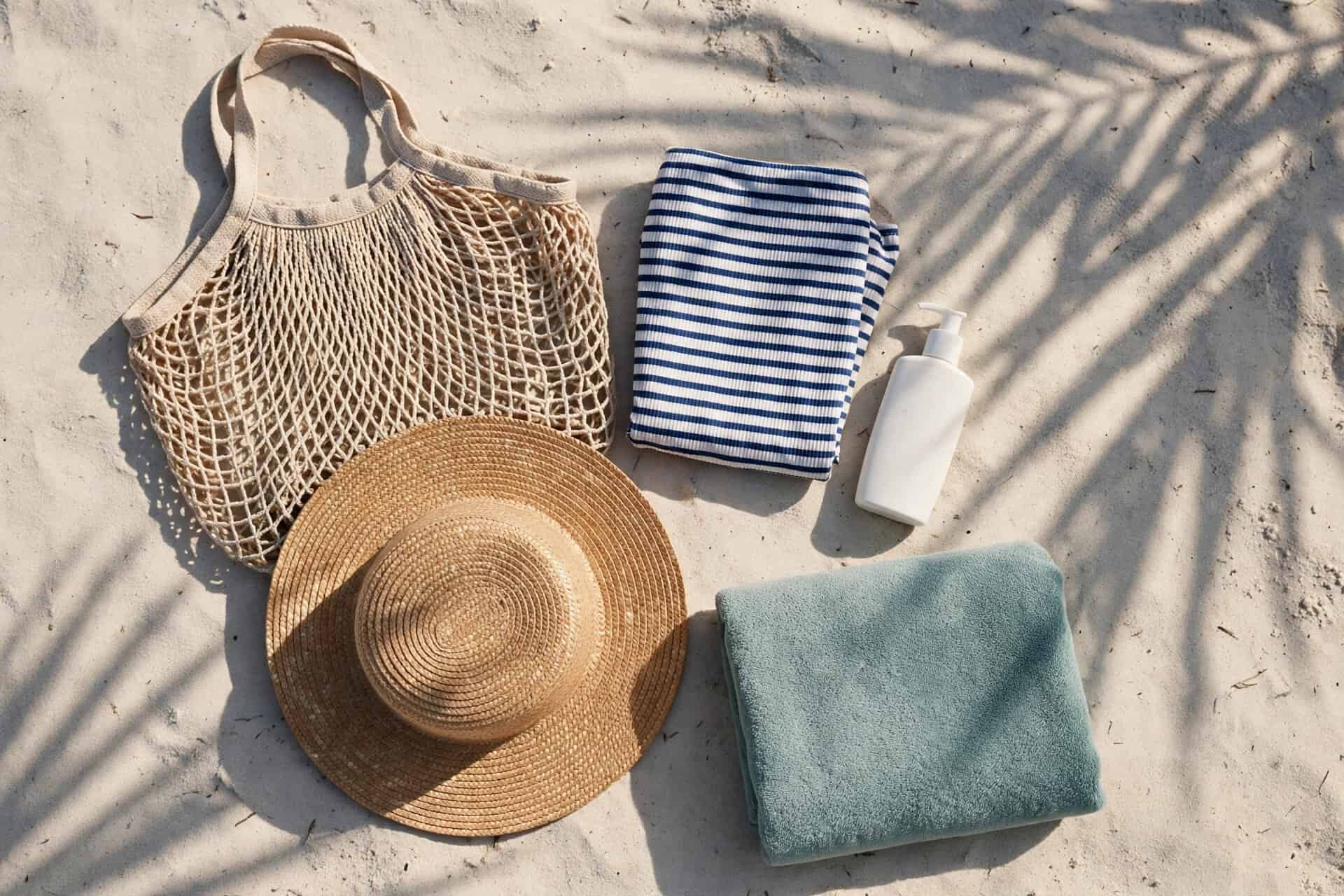
1. Two swimsuits, three for a week. One is always wet in this humidity — nothing dries overnight in Puerto Rico, it merely becomes less wet. Rotate two and each gets a full day to dry; a third buys you the Vieques beach day without a damp start.
2. Mineral sunscreen, SPF 50 — and more of it than feels reasonable. You will reapply after every swim, and a single bottle does not survive a week of that. The buy spec that matters: active ingredients only zinc oxide or titanium dioxide, water-resistant. (The honest legal position is in the sun-and-bugs section below — the short version: no law forces this, the reef and the tour operators are why you buy it anyway.)
3. A cover-up that works as a dress. Beach-to-lunch is a daily transition here — Condado and Isla Verde restaurants sit straight off the sand. One cover-up you could wear to a café table saves a hotel trip every single day.
4. A mesh beach tote. Sand falls out of mesh instead of travelling home in it. Pick one with a zipped inside pocket — room keys and phones vanish into loose totes. It doubles as your ferry day-bag.
5. A quick-dry towel. Hotel towels are for the hotel beach. A microfibre towel packs to paperback size and earns its place at Luquillo, on the ferry, and at every beach that isn’t yours.
6. A wide-brim hat with a chin strap. Shade is scarce and the trade winds are not your hat’s friend. The strap looks dorky and keeps the hat on your head on every boat — choose accordingly.
🏰 The Old San Juan Day: Cobblestones Decide Your Shoes
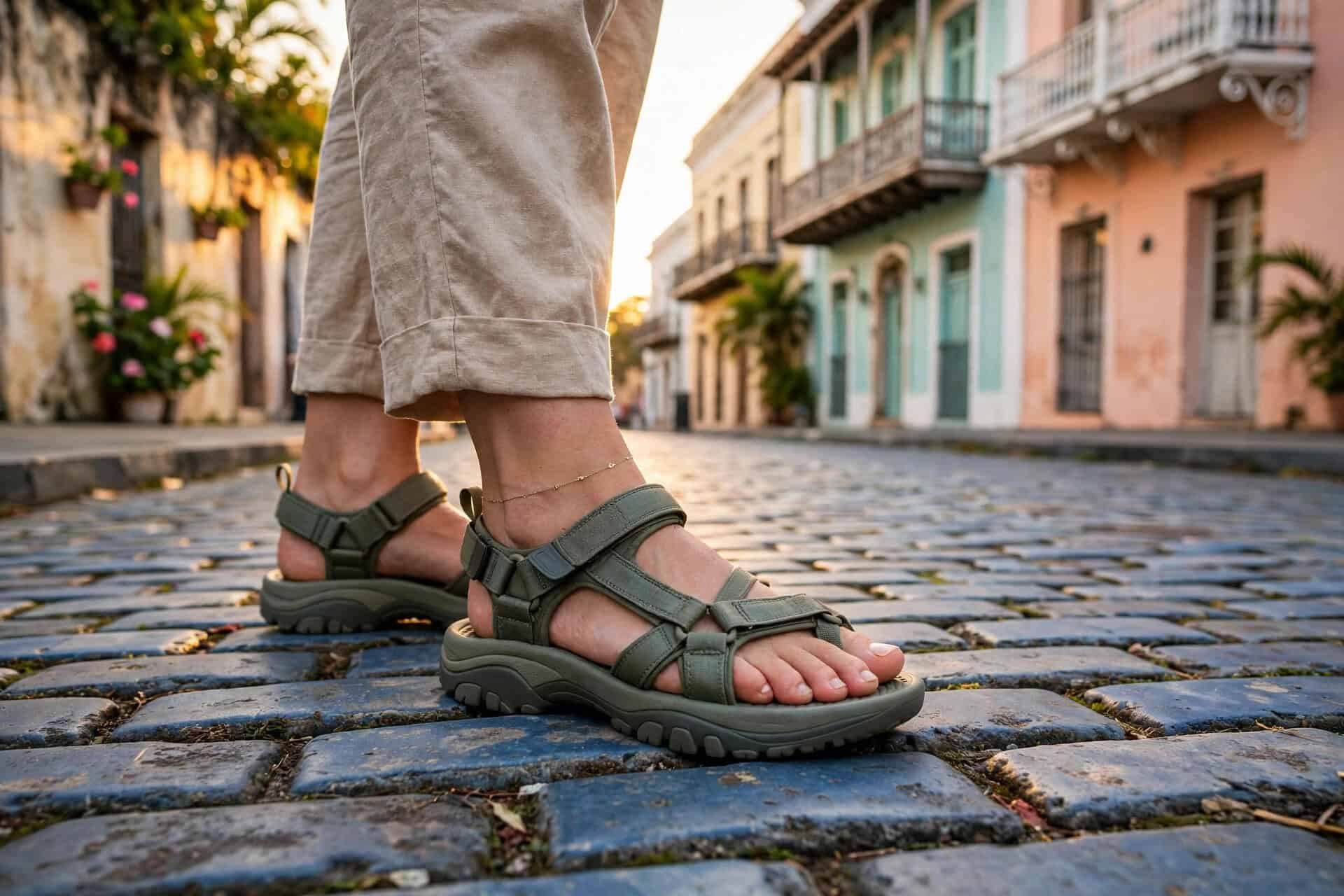
7. Walking sandals with real support — or your best cushioned trainers. The adoquines (blue cobblestones) are beautiful, uneven, and slippery when wet, and an Old San Juan day is 5–8 miles of them. Flat fashion sandals are the single most common packing mistake I see — and the one I made first. Break whatever you bring in before you fly.
8. A crossbody bag, not a tote. Hands free for the camera and the piña colada, bag zipped against your body in cruise-day crowds. It also keeps your bag out of the puddles when a shower hits mid-street.
9. One outfit that photographs. Old San Juan is the most photogenic day of the trip — pastel walls, blue stone, golden hour on the Paseo. This is where the good dress goes; the itinerary of your camera roll depends on it. My outfit-by-outfit version lives in What to Wear in Puerto Rico, and the photo spots in Puerto Rico Aesthetic.
🌧️ The El Yunque Day: Pack for the Rainforest Being Wet
El Yunque is the only tropical rainforest in the US National Forest System, and it behaves like one: it rains several times a day in the interior, trails are muddy and mossy, and the two famous waterfall trails (La Mina, Big Tree) are closed — your swim is Juan Diego or La Coca. Check the Forest Service El Yunque alerts page the week you go.

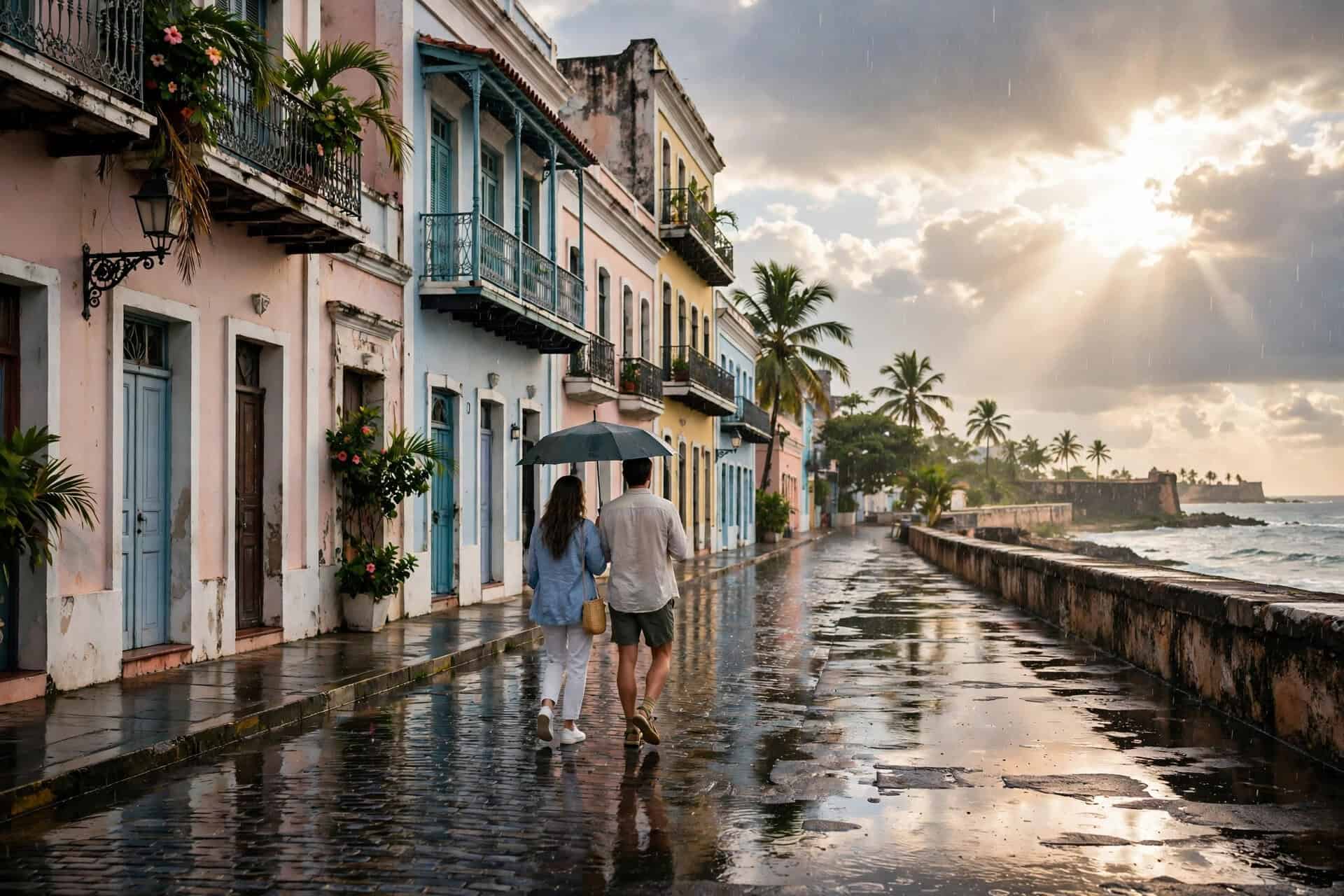
10. A rain shell, not an umbrella and not a poncho. A shell you will actually wear for three hours beats both. Umbrellas die in forest wind; the free poncho becomes a sauna. This is also your island-wide shower layer — San Juan downpours are short and theatrical.
11. Shoes that can get muddy, with tread. Closed-toe, grippy, and already broken in. They will get wet and dirty — that is the day working as designed. Wear them on the plane if space is tight; they’re your bulkiest item.
12. Non-cotton everything for this day. Cotton stays wet for hours in the forest. A moisture-wicking tee, quick-dry shorts or a sport skirt, and — the unglamorous hero — non-cotton socks, plus a dry change of shirt and socks waiting in the car.
13. A dry bag, 10–20L. Phone, wallet, the dry clothes, the car key — all of it goes in the dry bag before the trail, not after the first shower. It then works all week: bio bay night, ferry spray, wet swimsuits on the flight home. If you buy one thing from this list, buy this.
14. Your swimsuit, worn under your clothes. The waterfall pools are the point of the day. Changing facilities are not a plan; wearing the suit is.
15. A litre of water, minimum, and offline maps. Cell service is unreliable inside the forest. Download the map before you leave San Juan, and carry more water than the distance suggests — humidity dehydrates quietly.
✨ Bio Bay Night: The Section No Other Packing List Has
This is the night that breaks generic packing lists. Mosquito Bay and Laguna Grande are protected reserves, tours are kayak-only (swimming is prohibited), and the organisms that make the water glow are harmed by what’s on your skin. Operators are explicit: no sunscreen, no lotion, and no DEET repellent on the water — DEET kills the dinoflagellates you came to see. Pack for the night accordingly:

16. A botanical repellent, applied before the dock — for the shore, not the water. Mosquitoes are a mangrove-and-launch problem, at dusk, on land. A citronella/lemon-eucalyptus repellent applied before you arrive is the sanctioned pattern; on the water itself, you wear coverage instead of chemistry.
17. Long sleeves and long, quick-dry trousers for the launch. Your mosquito defence on bio bay night is fabric. Quick-dry matters because at Laguna Grande you paddle wet from the waist down.
18. Water shoes or strapped sandals. Dock, mangrove shallows, wet kayak — flip-flops retire for the night. (The same pair covers rocky beach entries all week.)
19. A dry change of clothes + the dry bag, again. You will be damp for the drive or walk back, and on Vieques the tour drop-off is late. Dry trousers in the dry bag is the difference between a magical night and a soggy one.
What not to bring on the tour: a white-light torch (red light only, if any), anything valuable that can’t get wet, and — repeating it because every generic list gets this wrong — the DEET spray. It stays at the hotel tonight.
Which bay, which night — the moon decides: my Puerto Rico Itinerary builds the whole week around it.
🌅 West Coast & Ferry Days: Slow Days, One Bag Move

20. A light layer — for the air-conditioning, not the weather. San Juan lows sit around 72–78°F all year; you will never be cold outdoors. You will be cold in restaurants, on the ferry, and on the plane. One light wrap or overshirt covers all three. (Heading to the mountain towns? Different island — Adjuntas can drop into the 50s°F in January. Most itineraries never go; if yours does, add a real fleece.)
21. Motion-sickness tablets, if boats are your weakness. The Ceiba ferry runs about an hour to Vieques and 45 minutes to Culebra, and the crossing can be choppy. Pack them in the day-bag, not the hold bag — a lesson usually learned once.
22. A power bank. Puerto Rico’s grid has occasional outages, your phone is your ferry ticket, map and camera, and a Rincón beach day is long. Slim bank, charged nightly.
23. A waterproof phone pouch. Ferry spray, Luquillo swims, the bio bay launch — the phone is near water every day of this trip. Test the seal at home with a tissue inside before you trust it with a phone.
🛂 Documents & Tech: The Easy Part (For US Citizens)

24. Your driver’s licence / REAL ID — and that’s it. No passport, no currency exchange, no plug adapter: Puerto Rico is a US territory, dollars and US plugs. International visitors: your passport, as for the US mainland.
25. A small cash float. Cards work almost everywhere; cash still runs the Luquillo kiosks’ smaller stalls, beach parking and tips. Small bills, in the crossbody, not the beach tote.
26. Packing cubes. One cube per day-type (beach / town / forest) is the version of this system that survives a two-base move: the Vieques night packs out of the main bag in two minutes.
☀️ Sun & Bugs, Honestly

The Reef-Safe Truth Box
Is reef-safe sunscreen required by law in Puerto Rico? No. You’ll read elsewhere that Puerto Rico bans chemical sunscreen — it doesn’t; bills were introduced and never enacted (the US Virgin Islands next door did ban oxybenzone — different territory, different law). Buy mineral anyway: it’s what the reefs need, what many snorkel and dive boats require, and the only thing allowed anywhere near a bio bay is nothing at all. What I pack: mineral SPF 50 (zinc oxide / titanium dioxide only) for the day, picaridin repellent for mornings and evenings — Puerto Rico has dengue, so daytime bites count too — and a botanical repellent reserved for bio bay night. Three products, three different jobs.
🌦️ The Weather You’re Packing For
Weather at a Glance
Year-round: highs 83–89°F · lows 72–78°F · the seasons differ in rain, not temperature
Dry season (Dec–Apr): March is the driest month (2.18 in) — pack the standard list
Wet season (May–Nov): November is the wettest (7.37 in) — the rain shell stops being optional; add a second pair of socks and a packable umbrella for town
Hurricane season: 1 June – 30 November, peak mid-August to mid-October (NOAA National Hurricane Center) — in these months, everything in the bag should survive getting wet, and the dry bag graduates to essential
🚫 What NOT to Pack

- Jeans. Heavy, slow-drying, miserable by mid-morning. My first-trip mistake; leave them home.
- A checked suitcase’s worth of “options”. Every piece here works on three days minimum — that’s the rule that makes one bag possible.
- Heels. The cobblestones eat them, literally — adoquines have gaps made for stilettos.
- Your DEET spray — on bio bay night only. It comes on the trip; it stays at the hotel that one night.
- Beach equipment. Towels, chairs and umbrellas are rentable or provided everywhere tourists swim; bulky gear is what the ferry charges you extra to carry.
- Expensive jewellery. Salt, sand, and one less thing to think about.
- A hair dryer. Every hotel has one, and the humidity wins anyway.
🧳 The Flight Home: The Section Nobody Else Writes — USDA Inspection
Every bag leaving Puerto Rico for the US mainland passes a USDA inspection at the airport, before airline check-in — your luggage is X-rayed and stickered, and you must present food and plant items to the inspector (USDA APHIS traveller page). The default rule: most fresh fruits and vegetables cannot fly home unless they’re on the APHIS allowed list (many tropical fruits are allowed after inspection — but pigeon peas, sweet potato, plants in soil, sugarcane and citrus-family plants are among the prohibited, and undeclared items can mean fines). The packing translation:
- Eat it there. The mango, the quenepas, the pastries — enjoy them on the island; don’t pack fresh produce “to see if it gets through”.
- Pack souvenirs where an inspector can reach them — top of the bag, not buried under wet swimwear.
- Roasted coffee is fine (unlimited, per APHIS) — it’s the souvenir to bring home instead.
- Arrive with buffer. It’s one more queue before check-in, and it moves fast only if you’re not sprinting.
🏨 Where You’ll Unpack

Where to Stay
San Juan nights — La Concha Resort, Condado · Booking 9.0 — the beach base this list’s beach days assume. Check rates →
San Juan nights — Hotel El Convento, Old San Juan · Booking 8.5 — wake up inside the cobblestone day. Check rates →
Vieques night — El Blok Hotel, Esperanza · Booking 9.0 — walk to the bio bay tour pickups; your dry change is two minutes away. Check rates →
Rincón nights — Tres Sirenas Beach Inn · Booking 9.7 — five rooms, right on the sand; books out early in high season. Check rates →
Full hotel-by-hotel guide: Where to Stay in San Juan
FAQ
Do I need a passport for Puerto Rico?
No — US citizens travel on a driver’s licence / REAL ID. Puerto Rico is a US territory: dollars, US plugs, US phone plans, no roaming.
What should I pack for a 7-day trip to Puerto Rico, carry-on only?
The system above: 3 swimsuits, 5–6 tops, 2 shorts, 2 dresses, 2 evening outfits, 1 activewear set, walking sandals + water shoes, a rain shell, a dry bag — every piece working on at least three days, in one soft bag you can lift onto a ferry.
Can I wear bug spray on a bio bay tour?
Not on the water. Operators prohibit sunscreen, lotion and DEET repellent during the tour — DEET harms the dinoflagellates that make the bay glow. Apply a botanical repellent before the dock for the mangrove launch, and wear long sleeves and trousers as your on-water defence.
Is reef-safe sunscreen required in Puerto Rico?
Not by law — no island-wide ban exists, whatever other lists tell you. Mineral sunscreen is still the right pack: reefs, boat operators and marine reserves expect it, and it’s the respectful default.
How much luggage can I take on the Vieques or Culebra ferry?
One small carry-on per passenger is included; extra items (coolers, beach chairs, boards, bikes) are ticketed per item, each way. It’s the practical reason this whole list fits one soft bag.
What can I not bring back from Puerto Rico?
Most fresh fruit and vegetables, unless they’re on the USDA’s allowed list and pass inspection at the airport — every departing bag is inspected. Roasted coffee, baked goods and souvenirs are fine; fresh produce is the trap.
Do I need a rain jacket for Puerto Rico?
Yes — a shell, not an umbrella. Short tropical showers hit year-round, and El Yunque rains several times a day. In the wettest months (September–November) it becomes the most-used item in the bag.
What to pack for Puerto Rico in December — and in October?
December: the standard list — it’s dry season, highs ~84°F, lows ~72°F; add the light layer for evening breezes. October: wet-season packing — rain shell non-negotiable, second pair of socks, everything dry-bagged, and hurricane season runs to 30 November, so keep the bag waterproof-ready.
Do I need an adapter for Puerto Rico?
No — same plugs, voltage and outlets as the US mainland.
Closing: Pack by Day, Then Stop Thinking About the Bag
That’s the whole system: five kinds of day, one soft bag, three skin products with three different jobs, and a flight home that starts with eating the mango on the island. Pack it once, tick it off, and spend the week in the water instead of in a shop replacing what you forgot.
The companion guides: Puerto Rico Itinerary for the route, Where to Stay in San Juan for the bases, What to Wear in Puerto Rico for the outfits, day by day.
I only recommend products I would use myself and all opinions expressed here are our own. This post may contain affiliate links that at no additional cost to you, I may earn a small commission. Read full privacy policy here.
